Drywall Repair in Central Missouri
SErving Jefferson City, Lake of the Ozarks, Sedalia, and All of Central Missouri
A crack climbing from the corner of a doorway. A hole behind the door where the knob hit one too many times. A brown ring spreading across the ceiling after a storm. Damaged drywall rarely fixes itself, and most of it gets worse with time. Rambo Drywall
repairs cracks, holes, and water damage in walls and ceilings in all of Central Missouri, then finishes each repair so it blends into the surface around it.
Cracks
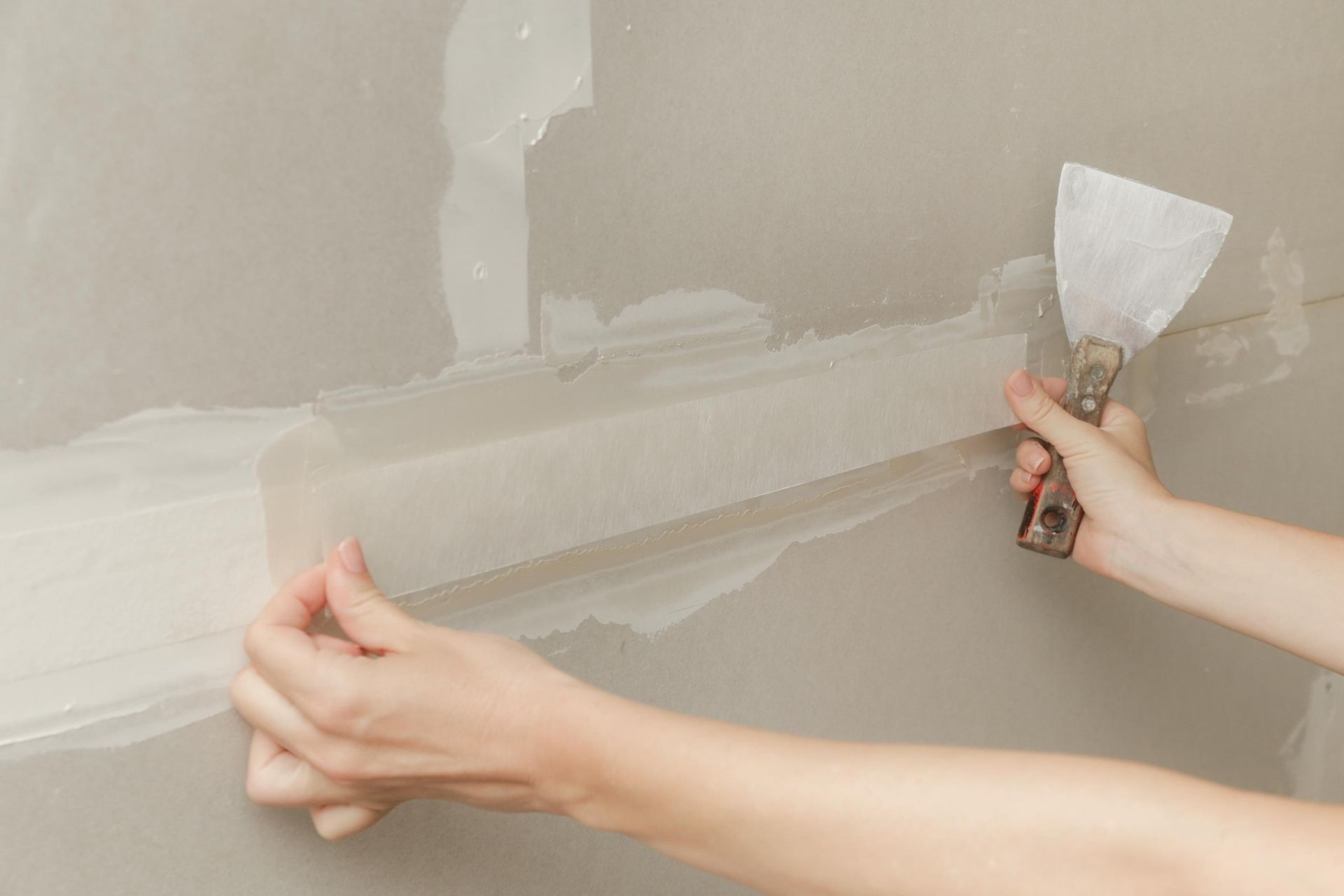
Cracks in drywall usually follow seams or start at the corners of doors and windows, where framing moves the most as a building settles and as seasons change. Painting over a crack or smearing compound into it tends to buy a few months at best. A lasting repair opens the crack up, removes loose material, and re-tapes the joint so the wall has something to hold it together. Compound is then built up and feathered out so the repaired line does not show.
When the same crack keeps coming back, that points to movement in the structure behind it. The drywall can be repaired, but the cause is worth knowing about.
Holes
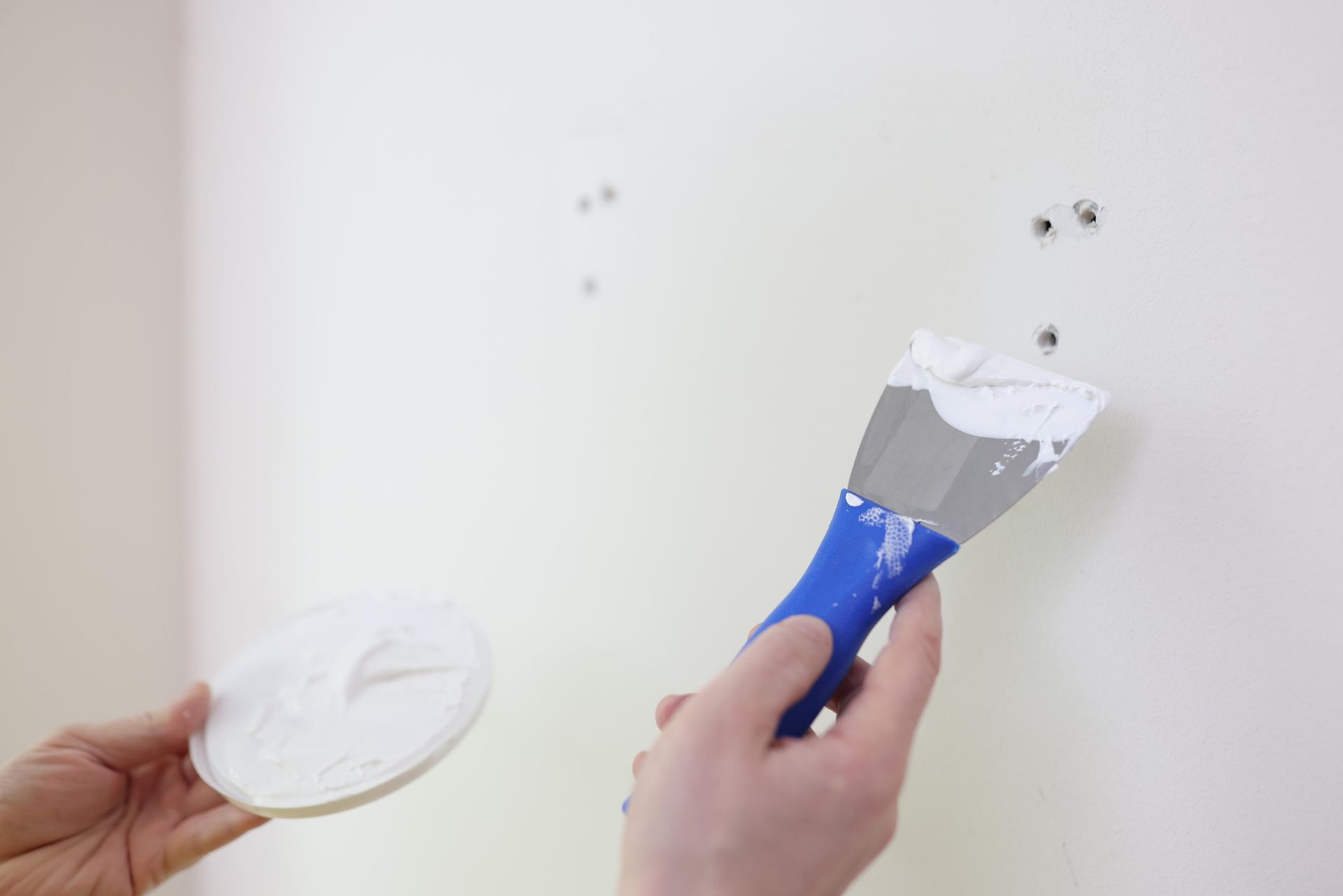
The size of a hole decides the fix. Small dents and fastener holes fill with compound alone. Larger holes need something to bridge the gap, such as a mesh patch or a backed piece of new board. Big holes, or a section of broken and crumbling board, are cut back to a clean rectangle, often out to the nearest studs, and replaced with a new piece fastened in place. From there, the patch is taped and finished like any other seam.
Water Damage
Water is hard on drywall. The gypsum core softens, the paper face stains and peels, and ceilings can sag under the weight of soaked board. Before any repair begins, the source of the water has to be stopped. A roof leak, a dripping supply line, or a failed seal at a tub will ruin new drywall just as quickly as it ruined the old.
With the leak fixed, wet or stained board is cut out until the remaining edges are sound and dry. Anything behind the opening, including insulation, should be dry before it is closed back up. New board goes in, gets finished, and is ready for texture and paint. If you see signs of mold during that process, have it looked at before the wall is closed.
Making the Repair Disappear
A patch that is structurally sound but still visible is only half a repair. The new section gets taped, mudded, and sanded like any finished seam, with the compound feathered wide enough that the edges vanish into the old surface.
Texture is often the hardest part. A smooth patch in the middle of a textured ceiling stands out right away.
Matching the existing wall or ceiling texture makes the repaired area read as part of the original surface.
Homes and Commercial Spaces
Repairs come up in every kind of building. In a house, they might follow a leak, a move, or years of normal wear. In a commercial space, they often come with a tenant change, a fixture removed from a wall, or damage in a busy hallway. Rambo Drywall handles repairs for both residential and commercial customers. For new walls, finishing, and texture work, see the full list of Rambo Drywall services.
Repairs Near Central Missouri
From its home base in Clarksburg, Rambo Drywall
repairs walls and ceilings in Jefferson City, Lake of the Ozarks, Sedalia, and all surrounding cities in Central Missouri
Drywall Repair FAQ
When can a hole be patched instead of replacing the whole sheet?
Holes up to a few inches across can usually be patched with compound and a mesh or backed patch. Larger damage is cut out to a clean opening and filled with a new piece of board. Replacing an entire sheet is rarely needed unless the damage runs across most of it.
Why does a drywall crack keep coming back after it is filled?
Compound alone has no strength across a moving joint. If the crack was filled without new tape, normal settling and seasonal movement will reopen it. A crack that returns even after proper re-taping can point to framing or foundation movement behind the wall.
Can water-damaged drywall be dried out and saved?
Board that got briefly damp and stayed firm can sometimes be dried and kept. Drywall that has softened, sagged, crumbled, or stayed wet for an extended period should be cut out and replaced, since the gypsum core loses strength once it has been saturated.
Should a leak be repaired before the drywall is fixed?
Yes. Plumbing, roofing, or sealing problems need to be corrected first, and the wall cavity needs to dry. New drywall installed over an active leak will be damaged the same way the original was.
How long before a drywall repair can be painted?
Repairs are finished in coats, and each coat of compound has to dry before the next is applied and sanded. Small patches may be ready for primer after a day or two. Larger repairs with several coats and texture take longer, especially in humid weather.