Drywall Finishing in Central Missouri
SErving Jefferson City, Lake of the Ozarks, Sedalia, and All of Central Missouri
Paint does not hide much. A raised seam, a dimple over a screw, or a ridge left by the trowel can disappear under bare light and then show up the moment the wall is primed. Finishing is the work that prevents that. Rambo Drywall does drywall finishing in all of Central Missouri, taping, mudding, and sanding hung board until walls and ceilings are smooth and ready for paint.
It is the slowest, most hands-on stage of any drywall project, and the one that decides how the room will look for years.
Taping the Seams
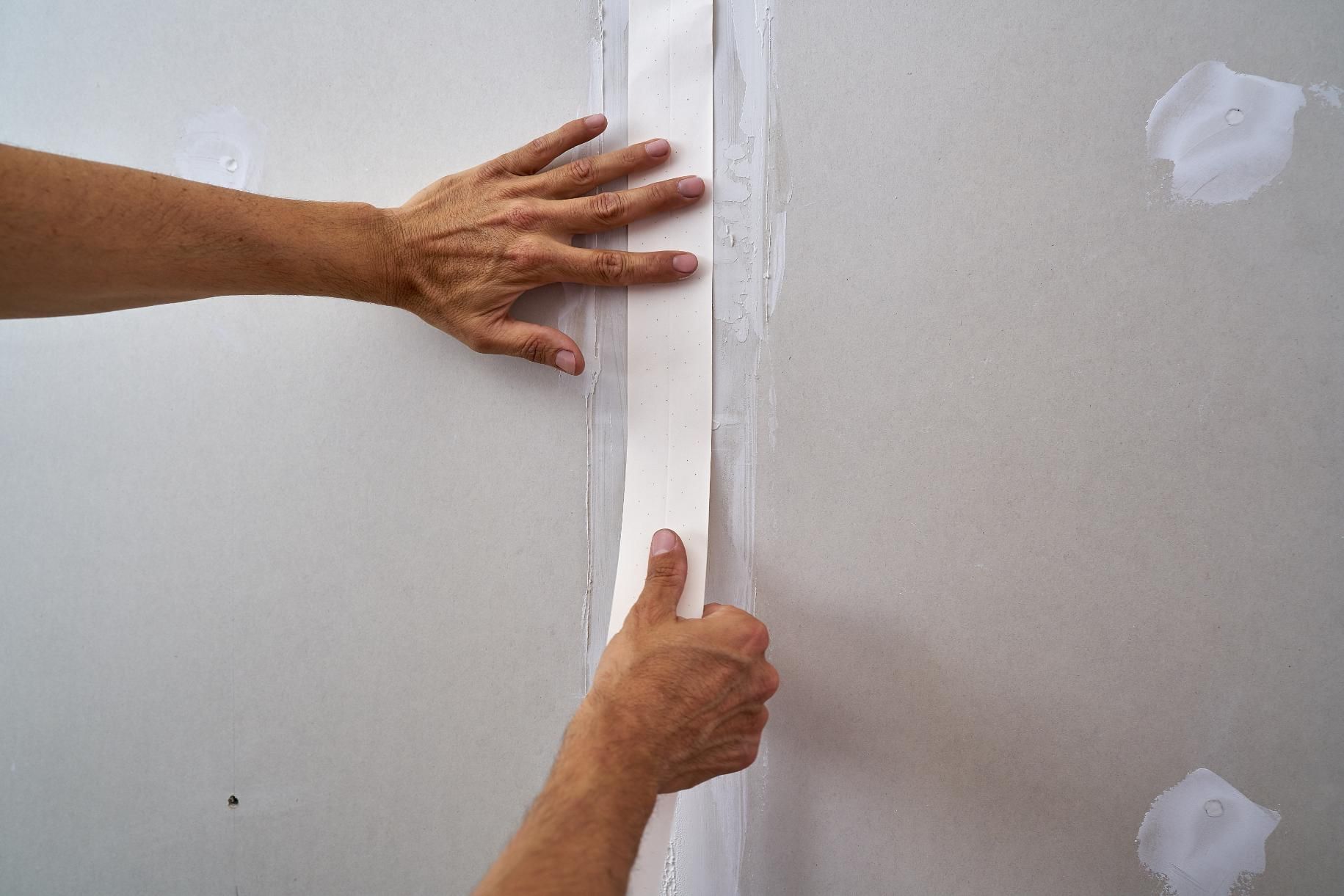
Every place two sheets meet is a weak line. Left alone, it would crack the first time the house settled or the seasons changed. Tape bedded in joint compound ties the panels together across each joint. Flat seams, butt joints, and inside corners all get taped, and the tape has to sit fully embedded with no air pockets underneath. A bubble left under the tape now becomes a blister later.
Outside corners get corner bead instead. The bead gives the corner a straight, durable edge that holds up to bumps from furniture, vacuums, and shoulders.
Coats of Compound
One pass of mud is never enough. Each coat is spread a little wider than the last, feathering the edges out so the seam blends into the flat face of the board instead of sitting on top of it. Fastener heads get the same treatment, coat over coat, until they vanish.
Patience matters here. Every coat must dry before the next one goes on. Rushing a coat over damp compound leads to shrinkage, cracking, and soft spots that show through paint. Humidity and temperature in the room affect how long that takes.
Sanding and Checking the Surface
Sanding knocks down tool marks and ridges between coats and brings the final coat flush with the surrounding board. Too little leaves edges you can feel. Too much scuffs the paper face of the drywall, which then looks fuzzy under paint.
Before a wall is called done, it gets checked under raking light, a lamp held close and shining across the surface. That low angle exaggerates every hollow and bump, so flaws get fixed while they are still easy to fix.
Finishing New Work and Repairs
Most finishing follows new drywall panels hung on bare framing, where every seam in the room needs the full treatment. The same process also completes patched cracks, holes, and water-damaged sections. On a repair, the challenge is different: the new compound has to feather out so far and so smoothly that the patch does not read as a patch once the wall is painted.
Residential and Commercial Finishing
Finishing works the same way in a living room and an office corridor. The difference is mostly in lighting and use. Long commercial walls under bright overhead fixtures show every flaw, while a bedroom wall gets a closer, slower look from the people who live with it. Rambo Drywall finishes board on both residential and commercial builds. You can see every service on the Rambo Drywall home page.
Finishing Services in Jefferson City, Lake of the Ozarks, Sedalia, and All of Central Missouri
Working out of Clarksburg, Rambo Drywall
finishes walls and ceilings in Central Missouri. Call us today to chat about your next project!
Drywall Finishing FAQ
What are drywall finish levels?
The drywall industry describes finishing in levels from 0 to 5. Level 0 is bare board with no tape or compound. Level 4 is common for walls that will get flat paint or a light texture. Level 5 adds a thin skim coat over the entire surface and is used where strong light or glossy paint would reveal any variation.
How many coats of joint compound does drywall need?
Most seams take a tape coat followed by at least two more coats, each one wider than the last. Screw and nail heads typically get two or three coats. Uneven framing or a high finish level can call for more.
How long does joint compound take to dry between coats?
Premixed compound commonly needs around 24 hours per coat, and longer in cool or humid conditions. Setting-type compound hardens chemically and can be recoated in a shorter window. The room's temperature and airflow make a real difference either way.
Why do seams or nail heads show through paint?
The usual causes are compound that was not feathered wide enough, tape that was not fully embedded, sanding that left ridges, or paint applied before the compound was completely dry. A flat or low-angle light source also makes small flaws far more visible than they were during finishing.
Does finished drywall need primer before paint?
Yes. Joint compound and the paper face of the board absorb paint differently. Without a primer coat, the taped seams can show up as dull or shiny stripes through the finish paint, a problem known as flashing.